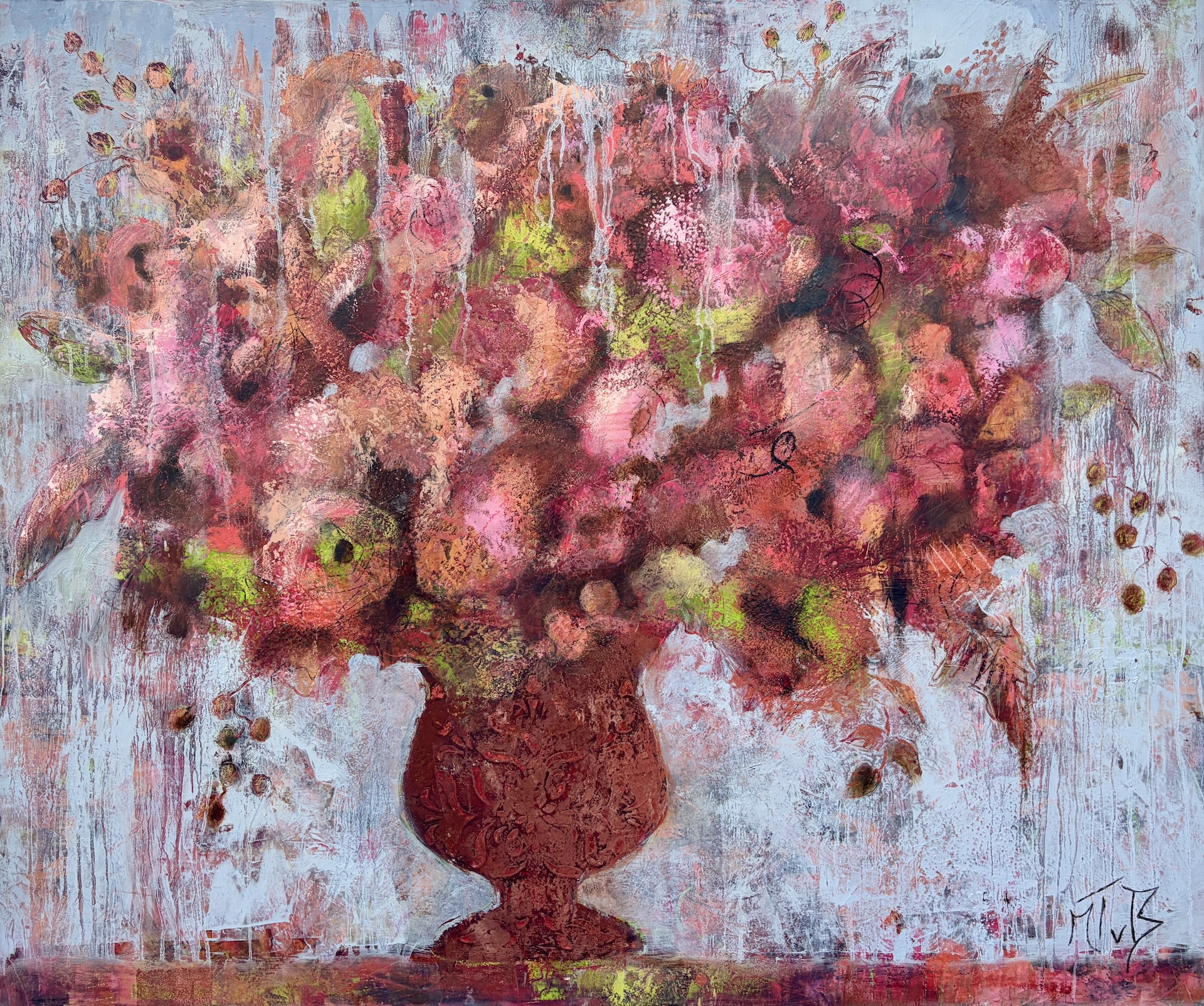
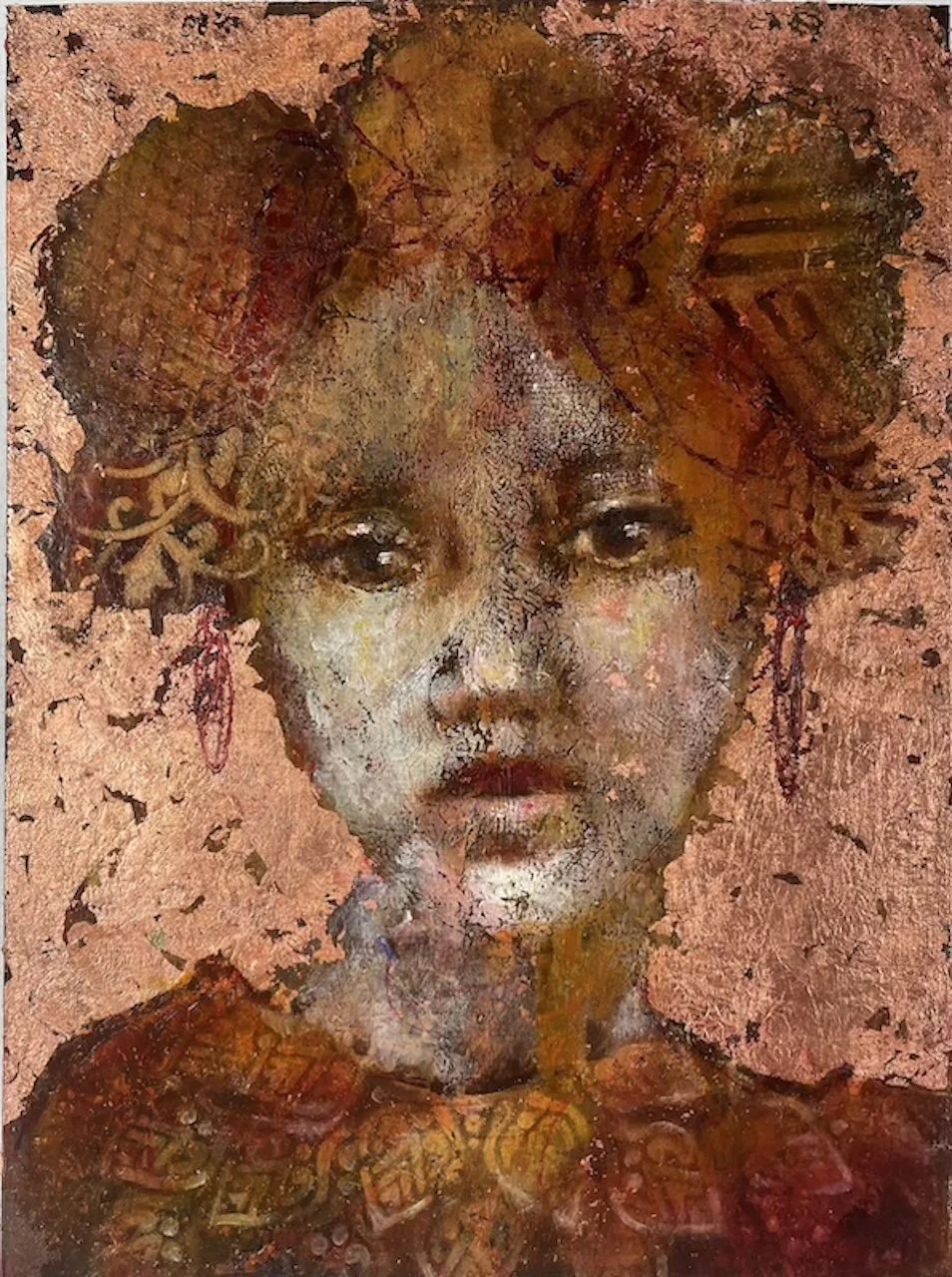
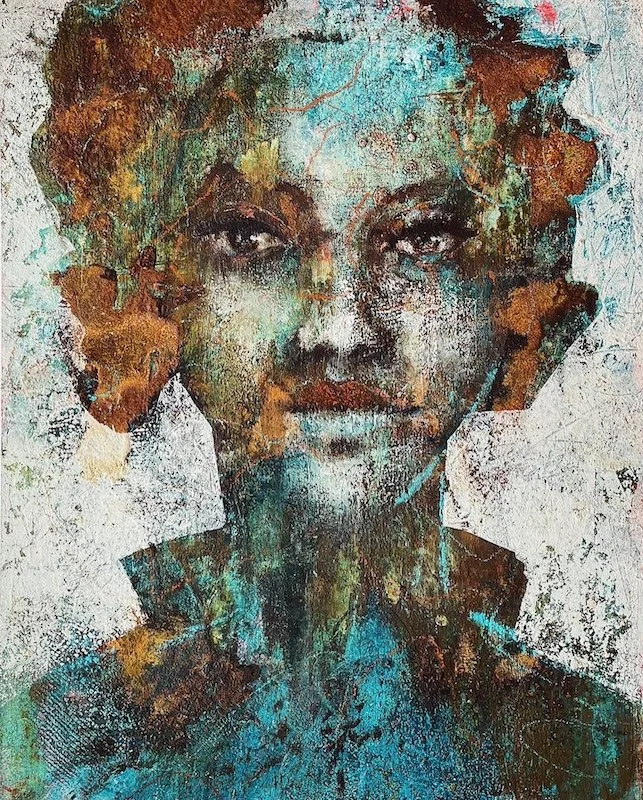
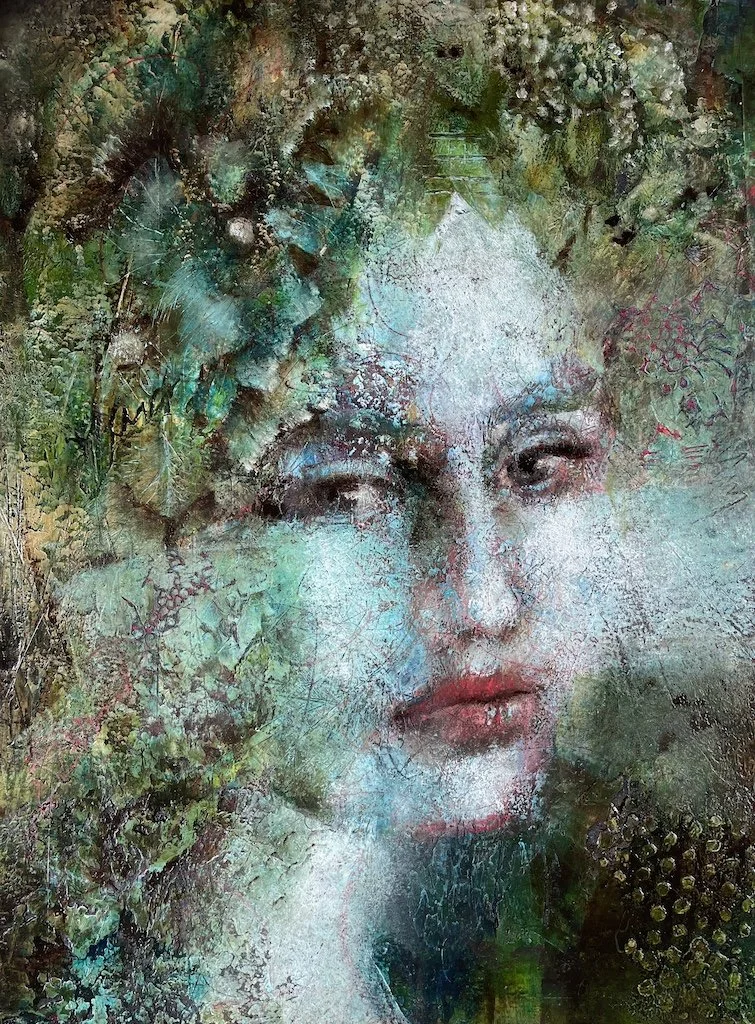
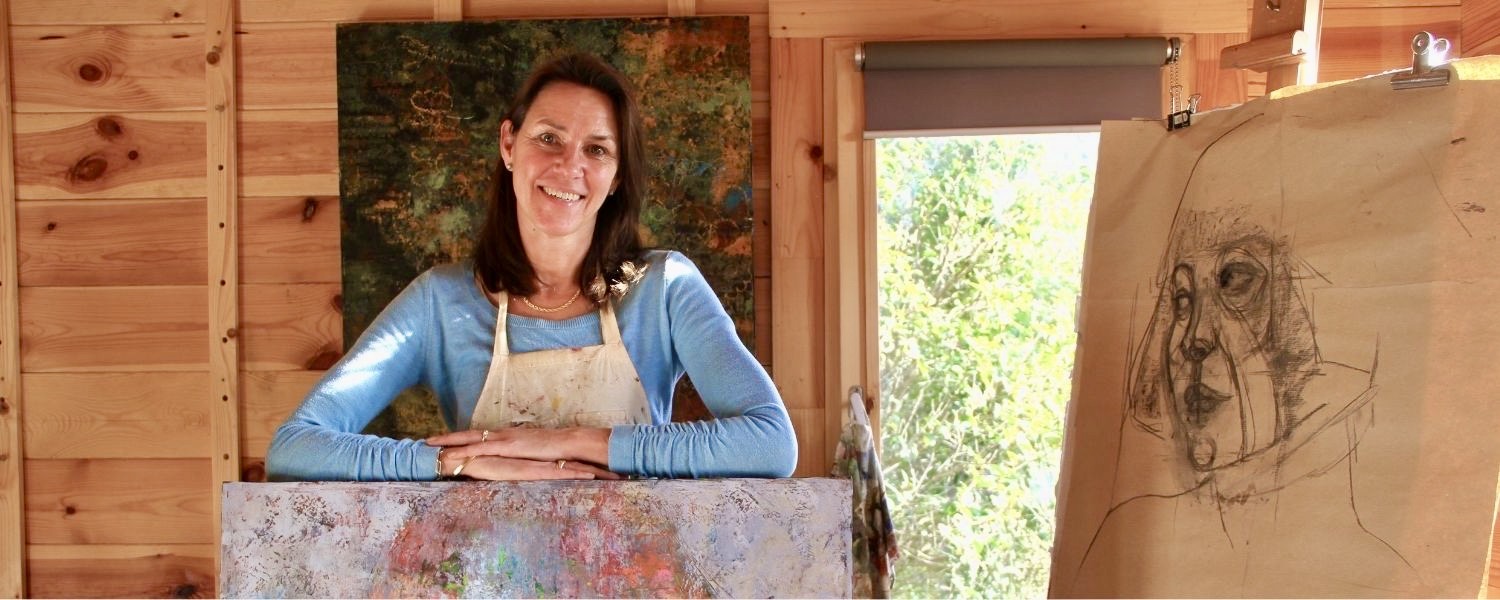
Today I want to share 5 different ways I like to sign my cold wax and oil paintings. Signing might seem like a small detail, but it really adds that final personal touch to your work. In the video below, I’ll show you a few methods I use, number 1 being my favorite!
1. The Transfer Method
This is my favorite way to sign larger paintings, it has a very organic feel to it. It is also a bit of a trial and error!
For this method, you’ll need a ‘donor paper’ , which means a separate paper where you spread a thin layer of cold wax mixed with oils (or acrylics mixed with Powerwax). I usually use backing paper.
If the layer is too wet or thick, it sticks too much to the painting.
If it’s too dry or thin, nothing transfers.
It takes a little practice, so don’t worry if it doesn’t work the first few times , just wipe it off with a baby wipe and try again.
2. Scraping into the Surface
Sometimes I like to carve my initials straight into the top layer of paint and cold wax (Powerwax). The surface should be dry enough to hold a mark, but not fully cured.
I use whatever I have: a sharp pencil, a needle tool, or even the back of a brush. And don’t worry about perfection, the subtle, carved look blends beautifully into the texture of the painting!
3. Signing on the White Edge of the painting
If I’m painting on paper with a white edge, I often sign there in pencil.
I love how it looks — clean, simple, and still personal.
And if you sell your painting, the buyer can choose to see the signature or not because If you use a mat to frame the painting, the signature can be covered.
4. Signing on the Back
Sometimes I don’t want to touch the front of the painting, especially if it’s busy or textured. In this case, I sign the back.
I usually include my name, the title, and sometimes the year.
It’s simple, effective, and keeps the front of the painting clean.
5. Signing with an oil-based marker (or an acrylic marker for paintings in Powerwax and acrylics!)
I don’t often sign with a marker as I find the lines a bit thin, but maybe that is just my pen so I encourage you to give it a try!
I hope these ideas give you inspiration to add your own touch to your work.
If you try any of these methods, I’d love to hear how it goes!
The Texture Lab
If you enjoy exploring texture and mixed media, you might also love The Texture Lab, my upcoming membership. It will be a place for creative experiments, lessons, and inspiration. Join the waitlist HERE